Lead Paint Testing and Lead Clearance Testing
If you have questions on your lead issue or lead paint issue just Google “Call Marko With A Question” or click on the tab in this website. A very small fee will apply.
Marko Vovk from Cleveland Ohio is lead paint testing licensed and certified to perform Lead Paint Clearance Testing, Lead Paint Inspections and Lead assessments
How To Pass A Lead Clearance Test
If you are involved with any governmental real-estate deal, transaction, or government subsidized rent, you may have to deal with lead paint clearance testing. If you know that you will be required to have a lead inspection, assessment, or clearance test, you should be prepared. All lead testing begins with a visual test. The inspector or assessor is not permitted to perform testing if the home initially fails to from a visual inspection.
Video below shows you how to pass you exterior “Lead Clearance Test.
Video below shows you how to pass you interior “Lead Clearance Test.
.
You will fail the visual inspection if one or more of the following exist:
- Failed paint anywhere.
- Peeling paint on upper overhanges and soffits.
- Peeling paint on any window anywhere.
- Deteriorated wood with peeling paint
- House leaks with peeling paint
- Exposed soil at drip edge or at play areas
- A dirty, dusty home
- Peeling paint on basement walls, floors or ceilings. Inspector will go into your basement.
- Paint chips on grounds, basement, window wells, and anywhere else
- You are not home for the scheduled inspection
If you have any of the above listed conditions you failed the visual lead inspection. You still have to pay the inspector $195 for the visit. If you pass the visual inspection, a state licensed lead assessor, inspector, or clearance technician will now evaluate the entire home.
It is no longer just that one window with peeling paint that will be tested; it is now the entire home. Additionally, you will now have to employ a state licensed lead contractor to paint that window, other findings and clean the entire home of dust.
The state licensed lead clearance professional will take between 13-20 lead dust and soil samples. Please make sure the home is clean and free of dust. You do not want to fail any tests. When you fail, you have to clean again and retest. You will also have to pay for a second visit.
I have done many lead clearance tests, and many times some homes fail the initial visual inspection. They fail because home owners have no clue as to what is to expected and what is going to occur. Many homeowners are simply not prepared.
NOTE: Landlords please do not make your tenants prepare for the lead clearance test. This is your job and your duty. Lazy landlords please call somebody else.
DO NOT CALL ME UNLESS YOU PREPAY OR HAVE A CHECK PRIOR TO MY INSPECTION or TESTING. I need a check for $195 before I get out of the car. I will need a second ceck for samples. This can range from zero samples to 20 samples. Fees for samples can change. Call for qote.
Average Exterior Only Lead Clearance Test $195-$295
Average Interior Only Lead Clearance Test $375-$495
Average Interior and Exterior Lead Clearace Test $375-$545
The following are examples of visual failures. If you have any of the below conditions you will certainly fail the initial visual lead clearance test.
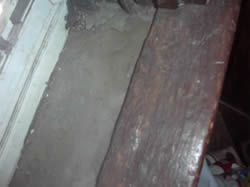 Window sills are dusty and dirty. |
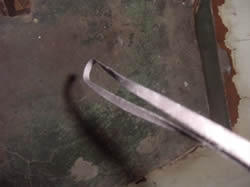 Floors are dirty and dusty. |
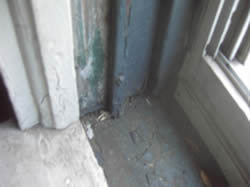 Window troughs are dusty and dirty with paint chips. |
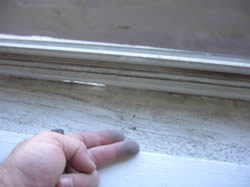 Visual dust means visual failure. I failed this home because of the dust on my fingers. Use a wet baby wipe to see how clean the surface is. If the wet baby wipe has dust on it, you will probably fail the lead dust test. |
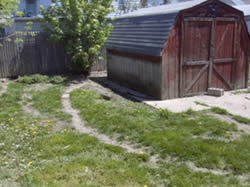 Dog path means exposed soil. Exposed soil means visual failure. |
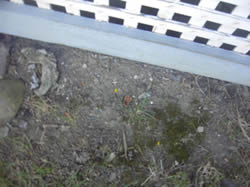 Exposed soil with paint chips on grounds. |
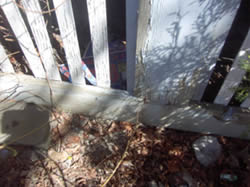 Failed paint on lattice. |
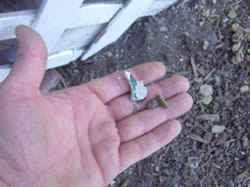 Exposed soil and paint chips on grounds. |
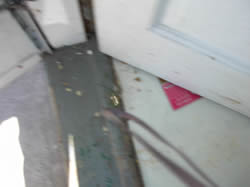 Paint chips, dust and debris on floors. |
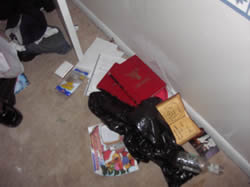 Many Section 8 tenants do not even own vacuum cleaners. Maybe Section 8’s yearly inspection should include looking for a broom or vacuum cleaner. |
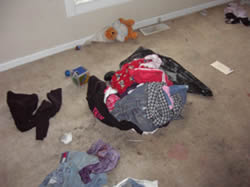 This one year old carpet is dirty and destroyed. Not sure how this happens? |
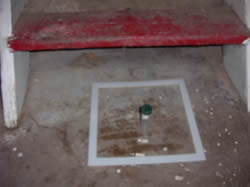 This landlord thought the basement dust was non lead. Dust in older homes has a 99% chance of containing lead contents. |
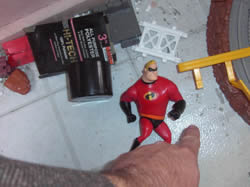 Paint chips on floor next to dirty toys always fail visual lead tests. |
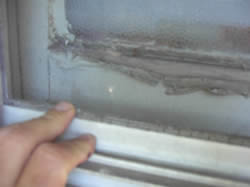 Do not trick the inspector by not being home for the scheduled inspection. The inspector can still see the peeling paint. |
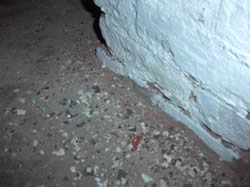 Do not forget the basement. Paint chips on the floor will fail. Some landlords are tricky. They lock the basement and tell the lead inspector that the tenants do not use the basement. If the basement is locked, and its not part of the rented space, the inspector does not have any business inspecting this area. |
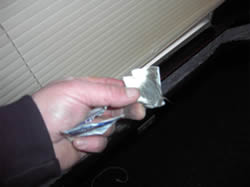 The wet wipe shows how dirty the floor is. Use baby wipes to check your home. If the baby wipe becomes dirty, chances are you will fail. |
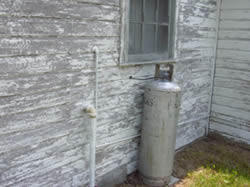 Scraping siding paint will contaminate the soil. |
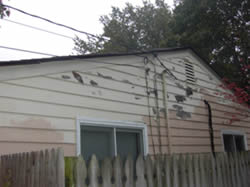 Exterior siding failed paint will always fail visual inspection. |
The Following Images Show How Lead Tests Can Fail.
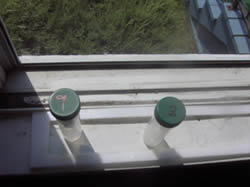 The home owner cleaned all house windows three days prior to the lead inspection. These lead dust tests still failed. Lead dust settled on the window troughs during the three days. Simply by opening an old window will generate high lead dust levels. Re-clean all the house windows several hours prior to the testing |
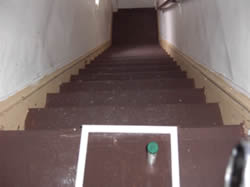 Hallway was recently painted. The lead dust test still failed. Lead was tracked in from the exterior peeling porch floor paint. Wash and clean all floors just prior to the lead inspection. Make the tenants leave the home for a couple of hours. If the mop water in the bucket is dirty you will certainly fail. Dirty water is full of lead. |
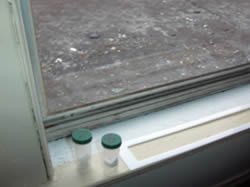 It does not take much lead dust for failure. This window was recently painted and cleaned. When I opened this window for my test, additional lead dust was generated by friction. The lead dust test in the window trough failed. HINT: Open the windows and leave them open for the inspector. If he has to open them they may fail because most old window is painted with lead paint. The windows rub and chip paint creating dust. |
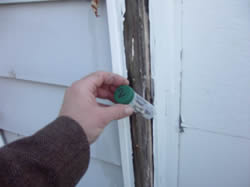 Exterior failed paint will always fail the visual inspection. |
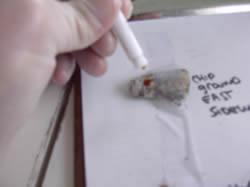 You can buy lead test kits from hardware stores. In Ohio the lead inspectors are not allowed to use these tests. Ohio lead inspectors must use laboratories. |
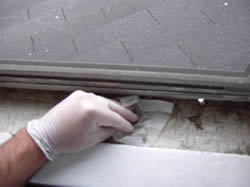 Window troughs will always fail if they are dirty and dusty. |
The Following Images Show Conditions That Generally Pass The Lead Dust Clearance Test.
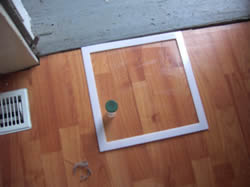 All interior entrance floors are clean and free for lead dust. |
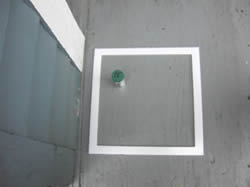 All exterior livable surfaces are clean and free from lead dust. |
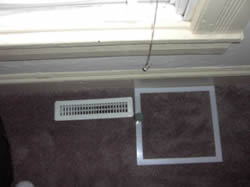 All carpeted floors are clean and free from lead dust. |
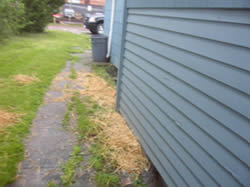 This is very sloppy ground cover. Bottom line, it passes visually. |
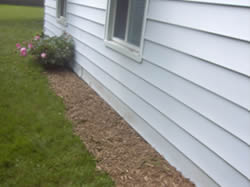 Exterior soil is mulch covered and it will pass the lead clearance test. |
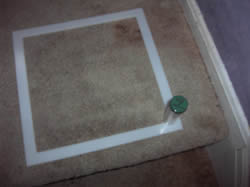 New carpets always pass. |
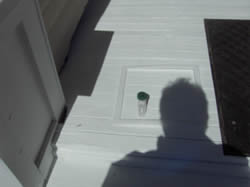 Painting exterior porch floors usually pass lead clearance tests. |
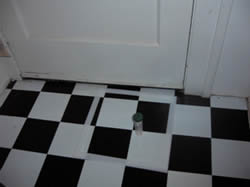 New linoleum floors always pass the lead dust tests. (Hint: wipe down the entrance door areas 15 minutes before the lead inspector arrives. MAKE HIM TAKE OFF HIS SHOES BEFORE HE ENTERS! |
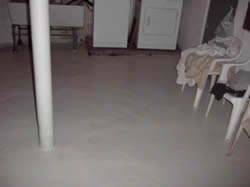 Painting the basement floor is the best way to pass a lead dust test. |
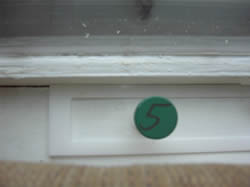 Sometimes the window paint is still wet. I went and had lunch. When I came back the paint was dry. It passed. |
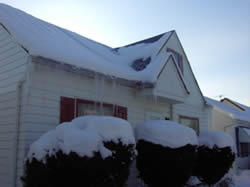 Saved by the snow. The inspector cannot test snow covered soil. |
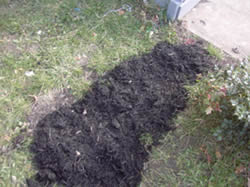 Covering exposed soil with mulch is good practice. |
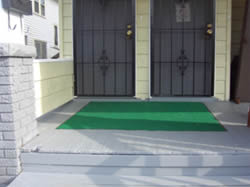 New indoor/outdoor carpeting at the front entrance was a good idea. New carpet will always pass. |
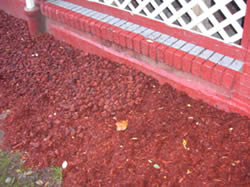 New stone with new mulch will always pass. |
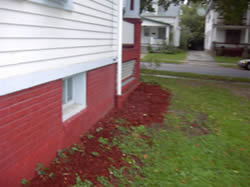 Red mulch at the drip edge will always pass. |
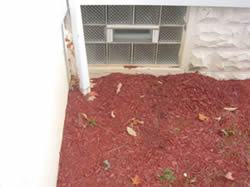 Excessive mulching still passes. |
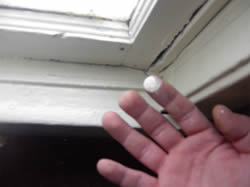 Try not to paint the windows the day before the scheduled test. Inspectors can not test wet paint. You will be charged for a second visit. |
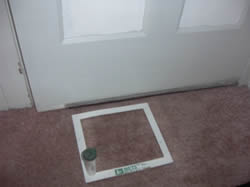 Inspector will always test the floor at the front and back doors. Clean these areas just prior to the testing. DO NOT LET PEOPLE WALK IN WEARING SHOES. The shoes may contaminate this area. |
FREE DOWLOADS (You need to read these)
Reducing Lead Hazards When Remodeling Your Home
Protect Your Family From Lead In Your Home
Testing Your Home For Lead in Paint Dust and Soil
LEAD INFORMATIOM
During the 19th century, paint manufacturers used “white lead” as a pigment for house paint. The paint could be tinted a variety of colors and was also a protective coating. The lead was used in paint on exterior and interior of homes, woodworking, furniture, and even cribs, for decades.
It was not until 1978 that the federal government banned the use of lead-based paint in residential housing. If you live in a home that was built before 1978, chances are good that it may contain some lead-based paint. Dust and paint chips from leaded paint can cause serious health hazards. Lead chips and dust can get on surfaces and objects that people touch. Settled lead dust can re-enter the air when people vacuum, sweep or walk through it.
Leaded paint that is peeling, chipped, chalking or cracking can pose a serious health hazard and needs prompt attention. Removing lead paint improperly will increase the hazard to your family by spreading even more lead dust. Special precautions need to be taken before beginning, remodeling or renovations on surfaces containing lead-based paint. Lead dust can form when lead-based paint is dry scraped, dry sanded or heated.
Dust also forms when painted surfaces bump or rub together. Lead-based paint found on surfaces that children chew or on surfaces that get a lot of wear-and-tear also can be a serious health hazard.
These areas, known as friction surfaces, include:
- windows and window sills
- stairs, railings, and banisters
- doors and door frames
- porches and fences.
Lead Contaminated Soil
Lead-contaminated soil exists in playgrounds, parks, tree lawns, gardens, and backyards. Lead-contaminated soil poses a threat when children play in it and put their hands or other objects covered with this soil dust into their mouths. There also is a health hazard when people bring this soil into the house on their clothing or shoes. This lead dust from that soil settles on the floors and other surfaces that people touch. Pets can track lead soil into the home. Do not let contractors who are working outside into your home.
One of the greatest sources of lead-contaminated soil was leaded gasoline. At one time, leaded gas was burned in nearly every automobile. When this fuel burned, the lead was released with the exhaust from the automobiles and settled on the ground. Although the federal government eliminated most use of leaded gas in the 1970s, approximately four to five million metric tons of lead still remains in our soil. Areas near roads, play areas, gardens, and tree lawns can be still highly contaminated. THESE AREAS MUST BE COVERED. (For more information please go to the PDF files in the lead section of this website.)
Also, leaded paint sandblasted, pressure washed and scraped from buildings and bridges scatter lead particulate and dust into the soil. Lead can enter the soil by rain draining from the sides of homes and buildings due to chipping or weathering of deteriorated paint. Surfaces of old, outdoor clothesline poles, basketball poles, and playground equipment may have been painted with lead-based paint. Old structures that may have been torn down years ago may have left paint chips on or in the soil. Lead-contaminated dust and paint chips from these surfaces can be hazardous when children play on them.
Banned pesticides that contained lead were once used in fruit orchards and now are contaminated in the soil. Other industrial pollution, such as exhaust from incinerators burning lead-containing products, contaminates the soil with leaded dust. Neighborhoods that are downstream from old lead smelters are highly contaminated. We found high levels of lead in a Cleveland attic that existed downstream from a lead smelter in 1930s. You can check the internet and see where all lead smelters once existed.
Federal Disclosure Rule
As of December 6, 1996, a new federal law requires landlords and homeowners to disclose the known presence of lead-based paint to all prospective buyers and/or renters of pre-1978 residences. Prospective buyers of pre-1978 homes will have a TEN-day period to check and test for the presence of lead-based paint hazards before becoming obligated to a sales contract. The law also requires renovators to provide a pamphlet detailing the hazards of lead-based paint before beginning work on pre-1978 dwellings.
For more information on lead testing call Marko in the field at 216-924-8378.
You can purchase a CD on lead from our EBAY store.
Additional information on lead can also be found in our Lead Paint Testing Section of this web site.
For Your Lead Clearance Test, Call Marko Vovk
216-924-TEST